
Last updated November 17, 2026
 Home additions & ADU
 Kitchen remodeling
 Bathroom remodeling
 Roofing
 Windows & doors
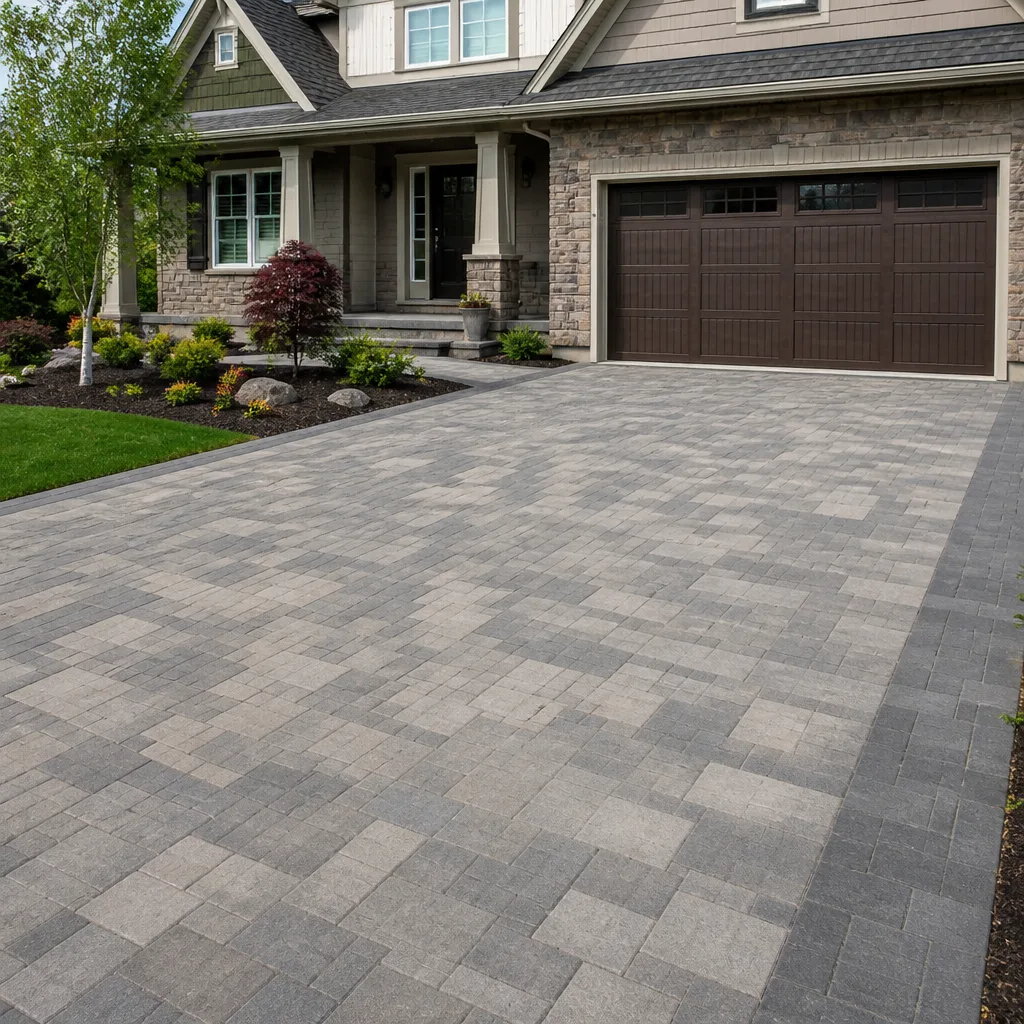 Driveway & pavers
 Fence
Free written scope consultation - allowances, timeline, and change-order rules on paper before a single trade is scheduled
Construction Warning Signs: A Las Vegas Homeowner’s Reference Guide
A stair-step crack in Las Vegas stucco doesn’t mean your house is falling down. It does mean you should stop calling it a cosmetic issue. That zigzag pattern, where a crack walks diagonally along the mortar joints of block or the shadow lines of a stucco wall, usually points to movement in the foundation below. Most homeowners here spot it, get sold a stucco patch, and watch the same crack reopen within a season or two. This guide is our attempt to fix that. We’ve organized the real warning signs we encounter in Las Vegas homes into exterior and interior categories, and we explain how to tell a DIY patch job from a structural conversation.
Quick Answer
In Las Vegas, the construction warning signs that deserve fast action are stair-step cracks in stucco wider than a credit card, doors that suddenly stop latching, bubbling under flat roof membranes, and any crack that’s growing month over month. Cosmetic hairline cracks, faded caulk, and settled driveway joints are normal and can wait for a scheduled quote. The difference is movement versus age.
Styles & brands we work with
- Kitchen remodeling
- Bathroom remodeling
- Home additions & ADU
- Roofing
- Windows & doors
- Driveway & pavers
- Fence
Table of Contents
- Exterior Warning Signs: Roof, Stucco, Driveway, and Foundation
- Interior Warning Signs: Framing, Plumbing, Electrical, and Finishes
- Settling Cracks vs. Structural Cracks in Stucco
- Warning Signs on Flat and Low-Slope Desert Roofs
- Deferred Maintenance vs. Acute Failure: How to Triage
- What Home Inspections Miss in the Las Vegas Market
- Common Mistakes to Avoid
- Frequently Asked Questions
Exterior Warning Signs: Roof, Stucco, Driveway, and Foundation
Every guide you’ll find online about exterior warning signs was written for a place with four seasons, deep soil moisture, and freeze-thaw cycles. Las Vegas has almost none of that. What we have instead is caliche, expansive clay, relentless UV, and soil that moves seasonally in a slow, quiet way. The failure patterns look similar at first glance but start in a different place.
Walk your property once every season. Start with the roof, look up at the stucco walls, scan the driveway for joint separation, and finish at the base of the foundation where stucco meets soil. Here’s what each area is telling you:
- Roof: If you have pitch, look for lifted, curled, or missing shingles; granules piling up in the gutter (UV breakdown); and dark staining along the underside of the fascia. If you have a flat or low-slope membrane, look for bubbles, blisters, ponding shadows, and seams pulling away.
- Stucco: Hairline cracks the width of a pencil line are cosmetic. Cracks wide enough to slip a coin into, or cracks that repeat at every floor line, aren’t. Watch for stucco pulling away from window frames and door corners.
- Driveway and pavers: Hairline joint cracks are age. Raised, heaved, or offset slab sections (one side higher than the other) usually mean soil movement underneath.
- Foundation: Look for visible gaps between the stucco edge and soil, exposed pier bases, and soil that’s pulled away from the wall on one side of the house while pushed up higher on another.
What all of these have in common is that the problem rarely shows up on the inside first. Desert homes hide the early stages of foundation and roof failure behind stucco, drywall, and interior finishes. If your exterior scan shows the same warning twice, that’s the point to get eyes on it professionally. Roofs, in particular, are dangerous to check from a ladder or a slope, and we recommend a trained professional for anything above the gutter line.
Interior Warning Signs: Framing, Plumbing, Electrical, and Finishes
Inside a Las Vegas home, the desert leaves its own fingerprints on framing, plumbing, electrical systems, and finishes. The moisture-driven warnings in national guides (attic condensation, mold along thermal bridges, flooded basements) are rare here, but the same components fail in different ways.
Framing. A drywall crack running vertically at the corner of a doorway or between two window openings is a common sign of shifting framing. If the door behind that drywall suddenly needs a shoulder to close, that’s not a drywall problem. That’s a structural signal.
Plumbing. Evaporative coolers, swamp coolers, and HVAC condensate lines are behind most of the interior water damage we see in older Las Vegas homes. Look for staining on the ceiling below the air handler closet, soft drywall at the base of a wall that backs the AC chase, or a mineral crust working its way through the paint near a condensate line entry point. The crust is calcium left behind when water evaporates, and it’s a slow signature worth reading.
Electrical. Tripping breakers, warm outlet covers, a light that flickers only in one room, and a smell like burned plastic from the panel are not quirks. Any sign of scorching, warmth, or a burning smell is a same-day call to a licensed electrician. Panels and wiring are not DIY territory, and no guide should tell you otherwise.
Finishes. Cupping tile, popped grout lines, a hollow thud under a floating floor, and doors that won’t latch in the summer but close fine in winter all suggest one of two things: a moisture event under the floor, or seasonal soil movement. Note which rooms, which walls, and which direction the doors stick before you call anyone.
If your interior warning signs are old and the scope is a remodel rather than a repair, our Las Vegas Construction Co team can help you separate a project scope from a diagnostic one.
Settling Cracks vs. Structural Cracks in Stucco
A hairline crack in stucco is expected and rarely structural. A crack wide enough to accept a coin, mirrored on the interior wall, and pointed in a stair-step pattern is your signal that something below is moving. The key is to compare the pattern, width, and location against a few simple criteria before you call anyone.
Here’s how to sort settling cracks from structural ones:
- Measure the width. Under 1/16 inch (a hairline you can barely see), treat as cosmetic. Between 1/16 and 1/8 inch, monitor monthly for growth. Wider than 1/8 inch, or wide enough for a coin to sit inside, get an inspection.
- Watch the pattern. Vertical cracks following a straight line are usually cured-material shrinkage. Stair-step cracks that walk along the diagonal of block coursing are usually settlement. Cracks radiating from a corner of a door or window are usually concentrated load.
- Track the growth. Photograph the crack with a coin against it for scale, same spot each month. If the gap is measurably wider in six months, movement is active. If it hasn’t changed, it may be original settlement from when the home was built.
- Look for the pair. A stucco crack on the outside with a matching interior drywall crack on the opposite wall of the same room is the classic pair that points to real movement.
What changes the diagnosis most is the soil under the house. Caliche is a naturally cemented soil layer common in parts of the Las Vegas valley, and it behaves very differently under a foundation than the expansive clay layers around some neighborhoods. Where the two types meet, a home can settle unevenly on one side while the opposite side stays steady. That’s why a stucco patch on one crack looks fine for a season and reopens the next, and why the fix that actually holds starts below the wall.
Warning Signs on Flat and Low-Slope Desert Roofs
A flat or low-slope roof on a Las Vegas home fails differently than a pitched-shape roof, and the UV index here makes it fail faster than in almost any other climate. Materials break down from the top down rather than the bottom up, so what looks solid can be one summer from a leak.
Here are the signs to check on flat and low-slope desert roofs, whether the covering is a modifier bitumen membrane, TPO, or spray foam:
- Bubbles, blisters, and wrinkles: Any soft, spongy, or puffed-up area of the membrane means air or moisture is trapped under the surface. Stop walking on the roof in those spots.
- Ponding shadows: Dark, dried rings or stained low points tell you water isn’t draining within the first day after a storm. Standing water sits on top of the roof and works in.
- Seam separation: Lifted edges at the seams, especially on the sun-facing side of the roof, are the first place UV damage attacks.
- Rusted fasteners or panel laps: In metal panels, small rust lines show up long before a leak starts. Those lines are a planning signal, not a today signal.
- Granule loss on shingles: If your pitched roof sections are shedding granules into the gutters, the shingles have lost their UV barrier. That’s a schedule-it-this-season message, not a fire-drill one.
What confuses most Las Vegas homeowners is that a low-slope roof can be leaking slowly for a year before an interior stain shows up. The desert sun dries out the top surface, the leak comes in during our short monsoon stretch, and by the time you see the brown ring on the ceiling, several summers of UV damage are already underneath. A roof that’s failing on a flat section is also a great time to think about how the rest of the envelope connects to it. Our driveway & pavers team often coordinates drainage and hardscape around roof replacement work so water has somewhere to go besides the foundation.
Deferred Maintenance vs. Acute Failure: How to Triage
Not every warning sign is a today emergency. Deferred maintenance warning signs can wait for a scheduled estimate next month. Acute failure warning signs want a call today. The triage question is: could this fail suddenly enough to risk safety or structural damage before a scheduled visit?
Use these two tiers to decide:
- Call today: Any smell of burned wire or scorching from an outlet or panel. Water actively dripping from a ceiling or running down an interior wall. A roof section visibly sagging or a large area of ceiling bulge. A stair-step stucco crack that’s measurably wider than it was a month ago. A foundation gap you can see daylight through. Broken glass, a door that no longer locks after a hard close, or a window frame that’s separated from the wall.
- Get a quote next month: A hairline stucco crack that hasn’t moved since you moved in. Granule loss on shingles. Faded caulk lines. A driveway crack less than 1/8 inch. A door that sticks in summer. Tile that’s cupping without a moisture source. A flat roof bubble that’s not growing. Old siding that’s painting badly but isn’t letting water in.
Between the two tiers, use your phone camera. Photograph the warning sign with something for scale, mark the date, and take the same shot four weeks later. Movement that’s visible in a photo is an active warning. Movement that hasn’t changed in a photo is a planning warning. When we come out for a free estimate, those photos let us see the same progression you’ve been watching instead of guessing at how a crack got where it is. That’s one reason a written, line-item estimate beats a verbal number here. We’ve built our fence installation quotes on the same principle: photograph first, quote from what we see, not what we assume.
What Home Inspections Miss in the Las Vegas Market
Standard home inspections catch a lot. They also have blind spots specific to the Las Vegas market, and those blind spots are where the costliest surprises hide after a purchase.
The signs most often missed here break down like this:
- Caliche soil behavior under the foundation. A home inspector is not a soil engineer. They see cracks and report them, but they can’t tell you whether the soil under one corner is expansive or cemented into caliche. That’s a separate evaluation, and worth getting on any home with visible stucco cracking.
- Flat roof membrane age and bubble spots. Inspectors often note “roof was not walked” when the roof is low-slope or hard to access. That’s not their fault, but it means the most UV-exposed surfaces go uninspected. A roofing contractor’s eyes on a flat roof are worth arranging before closing.
- Evaporative cooler plumbing inside the walls. Older Las Vegas homes with swamp cooler lines running through interior wall cavities fail quietly. Look for rust or mineral crust at any point where the cooler line meets drywall. Inspectors rarely trace those lines.
- Seasonal door latching and window seal failures. A home inspected in winter can pass with doors that would stick in July. The Arizona and Nevada heat cycle loads the frame differently than the cooler season, and a summer re-check catches what a winter inspection missed.
- Aluminum wiring and panel upgrades in older neighborhoods. Not a scandal, but an older panel with a mixed breaker inventory and no visible labeling deserves a licensed electrician’s eyes, not just a photo.
If you’re buying in Las Vegas and want a second opinion on construction warning signs before you close, get a licensed contractor out for a walkthrough. Additions built on top of an older issue are the most expensive surprise in the transaction. Our home additions & ADU scope often begins precisely there, sorting out what needs to be corrected before new square footage is added.
Common Mistakes to Avoid
- Painting over a growing stucco crack. The next cycle of monsoons will find the same crack and open it wider. A legitimate repair starts with the cause, not the finish, and a repeated patch is a sign that nobody has diagnosed why it moved.
- Treating every crack as structural. Hairline and shrinkage cracks are normal and fixing them is a waste of money. If it’s moving less than a pencil line and hasn’t changed in a year, prioritize something else.
- Skipping the roof inspection because the interior looks dry. Desert roofs can shed water for a season and still be under a year from failing. Get the roof covering looked at after every five-year point, especially on flat sections.
- Hiring a roofer who can’t talk about stucco. Warning signs rarely stay in one trade. A roof leak shows up in the stucco; a foundation leak shows up in the drywall. Using one contractor for the roof, the walls, and the interior keeps the story connected instead of putting three vendors in conflict.
- Accepting an anonymous material bid. If a quote says “roofing materials” or “pavers” without naming the manufacturer, you can’t compare apples to apples or read the manufacturer’s warranty terms. We name the brands before you sign the contract. That’s true on roofing (GAF, CertainTeed, Owens Corning materials), on hardscape (Belgard and Techo-Bloc pavers), and on exterior cladding (James Hardie siding) whenever those products fit your scope.
- Ignoring AC condensate lines. Evaporative cooling and HVAC condensation are behind most interior water damage in Las Vegas homes. A drip pan inspection is a five-minute task that saves a ceiling repair later.
- Not asking who pulls the permits. Repairs to structural, roof, electrical, or window work often require a permit in Clark County, and the line-item estimate should say who’s pulling it. If nobody will say, ask again.
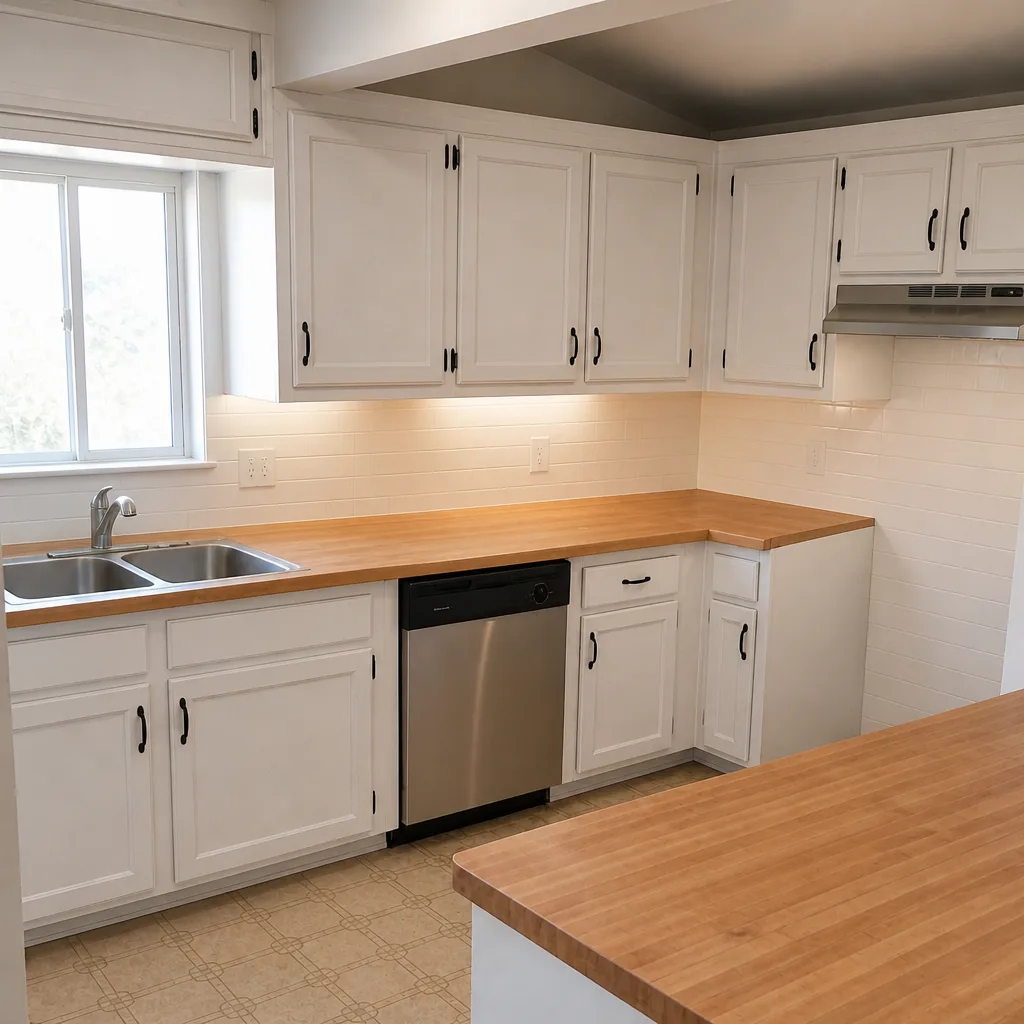
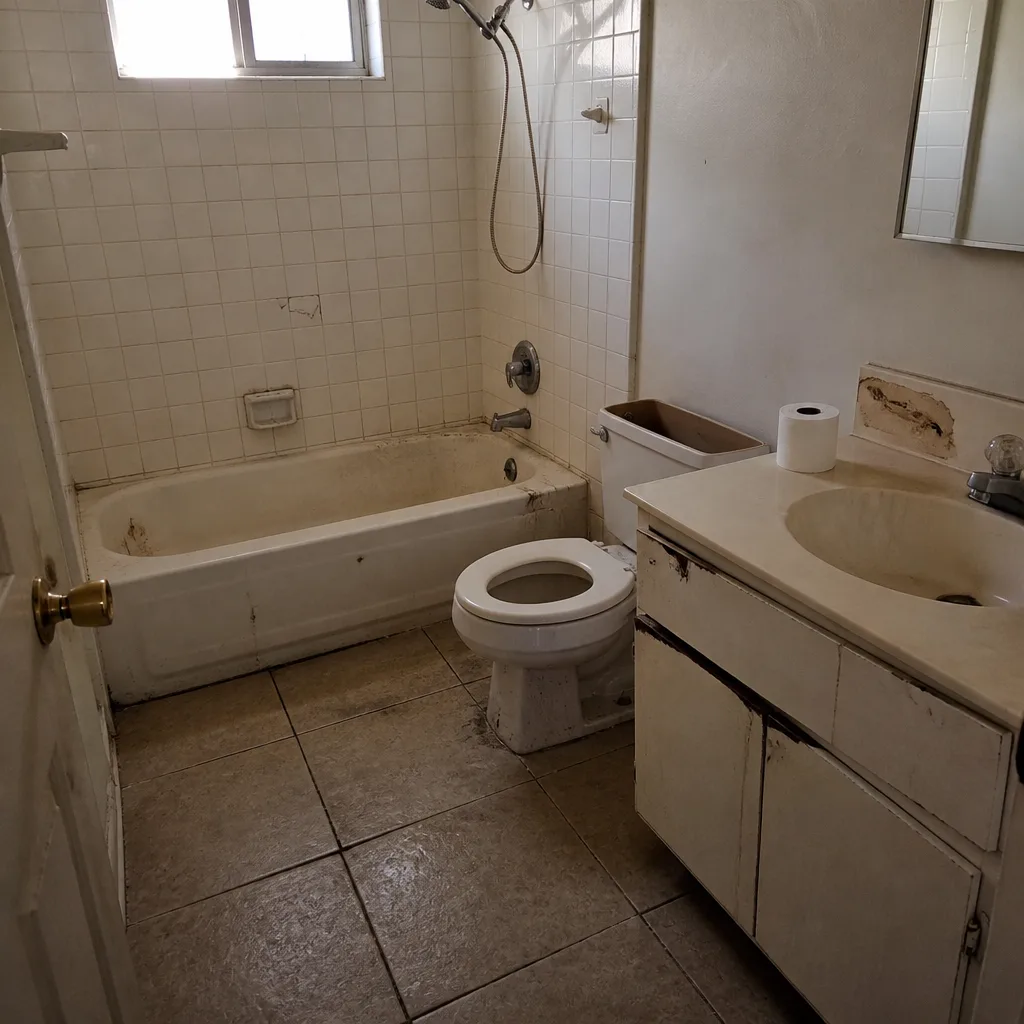
See the difference
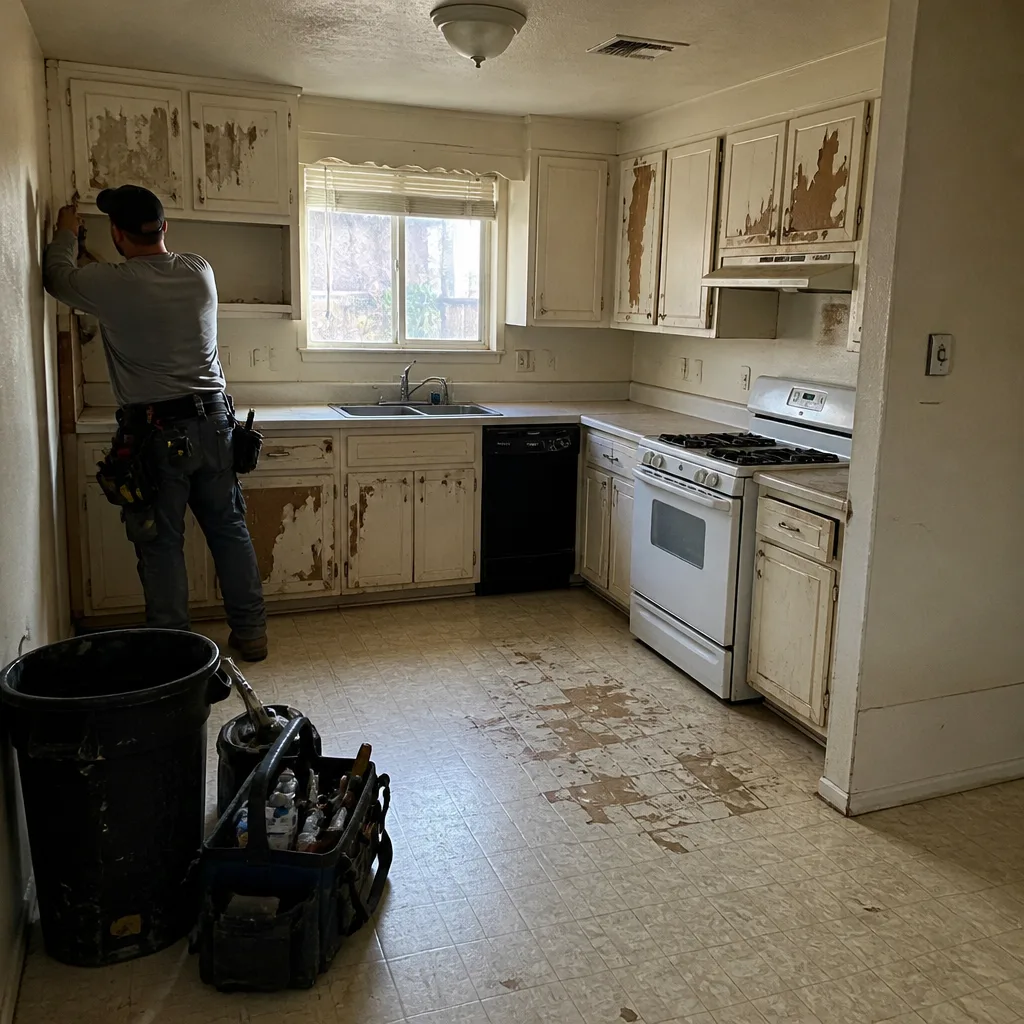 Before
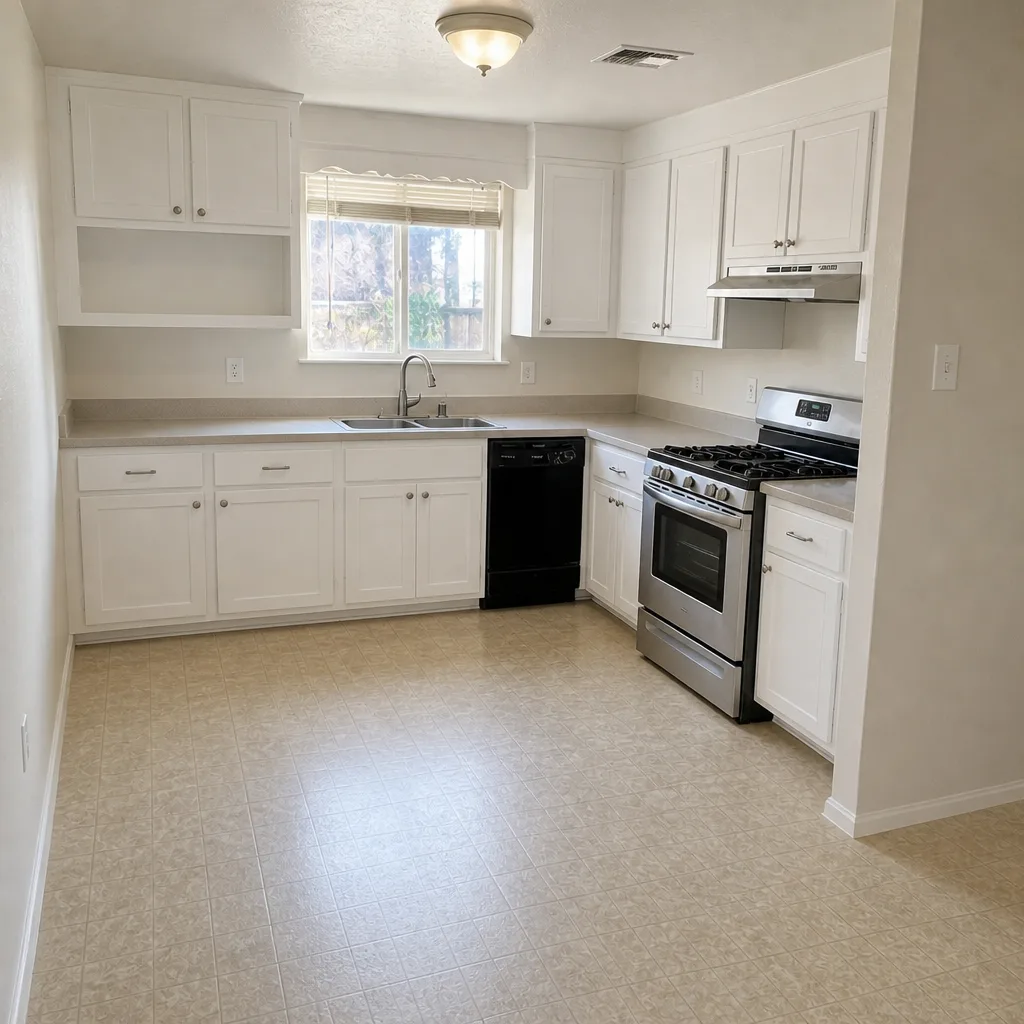 After
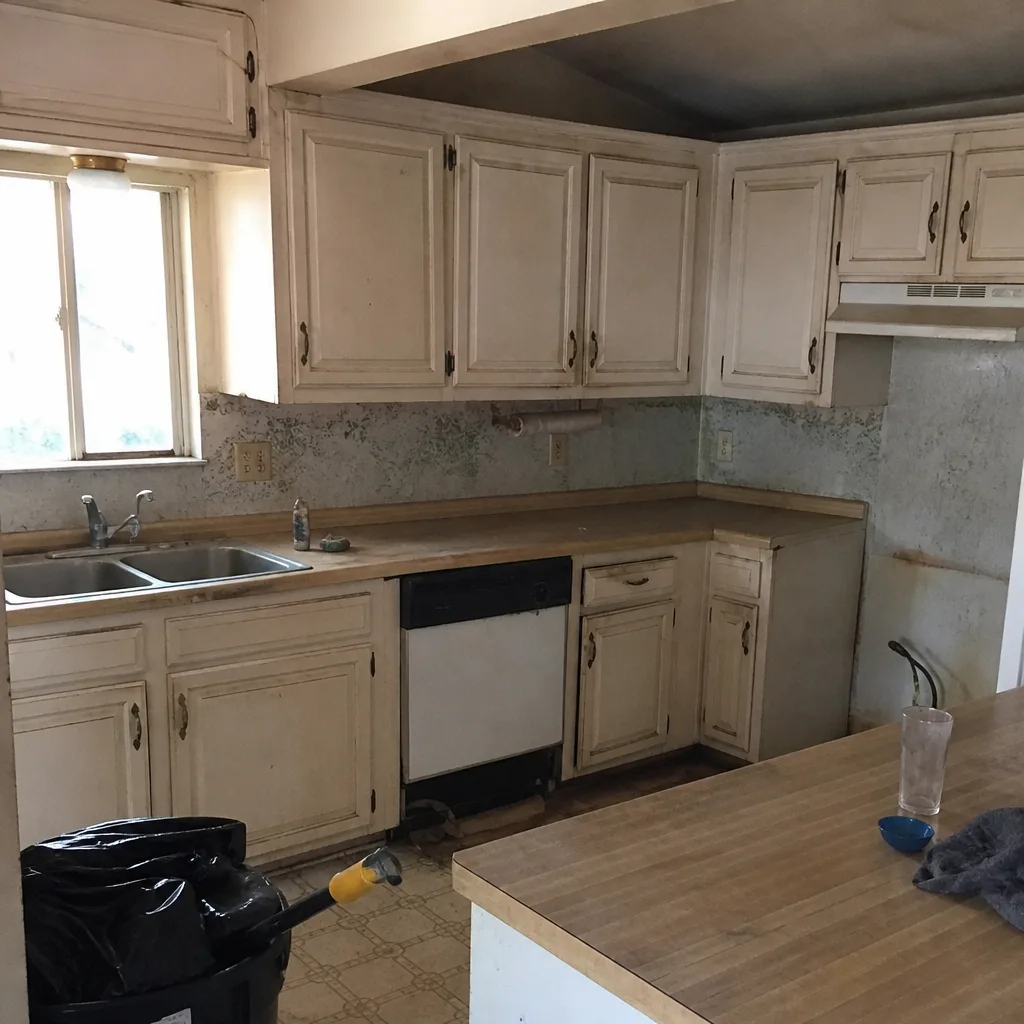 Before
 After
 Before
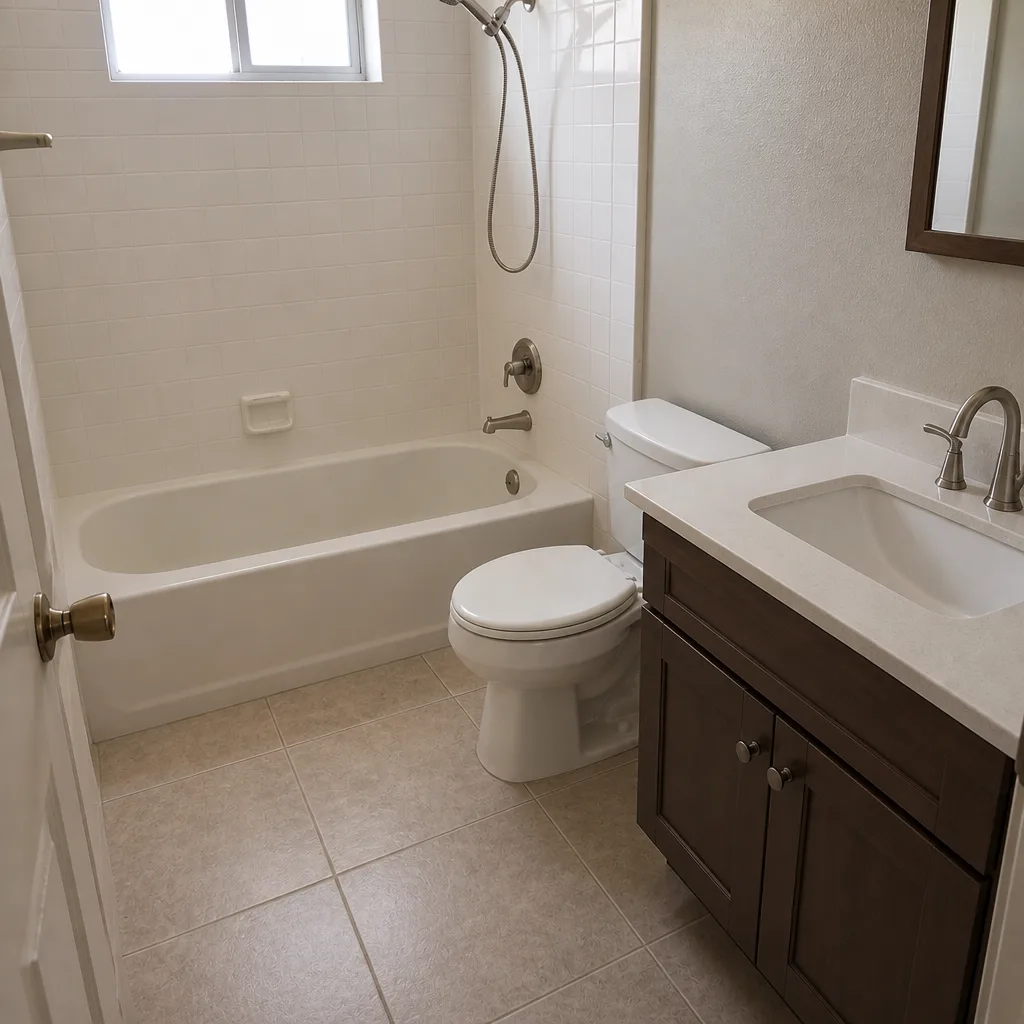 After
When to Call a Professional
Call a licensed professional when a warning sign is moving, widening, or showing up in two places at once. Specific triggers: a stair-step stucco crack wider than 1/8 inch; doors that no longer latch without a push; a ceiling stain with a mineral crust at the edge; a flat roof bubble larger than your open hand; any electrical warmth, smell, or sign of scorching; and foundation gaps that let daylight through. Also call when the diagnosis is unclear. A phone conversation costs nothing and prevents the wrong contractor from being sent out.
For reconstruction, remodel, or envelope work that comes after the diagnosis, Las Vegas Construction Co offers free estimates in Las Vegas. Our technicians have up to 8 years of experience, we’re licensed and insured, and our written line-item quotes name the brands and materials before work begins. Call (844) 629-1061. We answer 24/7. Fast dispatch from 7am to 7pm, Sunday through Friday.
Frequently Asked Questions
A stucco crack wider than 1/8 inch, one that zig-zags in a stair-step pattern along block joints, or one that mirrors a matching crack on the inside wall of the same room is generally the point where a professional should evaluate. Hairline cracks under 1/16 inch that haven’t grown are usually cosmetic. Photograph the crack monthly with a coin for scale; if the gap widens, it’s active. Call (844) 629-1061 for a free estimate on repair and diagnosis.
Issues around evaporative cooler plumbing and HVAC condensate lines, aging flat roof membranes on desert-modern architecture, foundation movement in caliche and expansive soil, and aluminum branch wiring in older panels. Older neighborhoods also tend to show sticking doors in summer heat and stucco cracks near window and door corners. Any of those, on their own, is a prompt for an inspection, not a panic. Call (844) 629-1061 to schedule a free estimate.
Not usually. A thin joint crack in a Las Vegas driveway is normal age and sun exposure. A driveway is a more reliable warning when one slab section has heaved well above the one next to it, or the surface has broken away from the garage apron. That pattern suggests soil movement rather than typical wear. Call (844) 629-1061 for a free estimate on driveway and paver review.
Bubbles and blisters on the membrane, ponding shadows at the low points, lifted seams on the sun-facing edge, and rust dots along panel laps are all desert-specific signs. The UV load here breaks down flat roof materials faster than in milder climates, so those signals show up earlier than most homeowners expect. If any of those are visible, get eyes on the roof. Roof work above the gutter line is a job for a trained professional. Call (844) 629-1061 for a free estimate.
It usually matters less than fixing the paper trail around them. A buyer’s inspector will find the same cracks and bubbles you’ve been watching, and the negotiation moves quickly when the report says “active movement” or “roof at end of life.” Getting a licensed contractor’s written estimate on a repair scope before listing tends to move a transaction along better than the number itself. Call (844) 629-1061 for a free written estimate.
No, if the scope was written properly. Our written estimate is line-itemed by material and labor, and the estimate sets the final price for that scope. If we find a hidden condition after demolition – like a slow leak that started under the tile – we stop, show you what we found, and re-quote in writing before continuing. There are no surprise change orders. Call (844) 629-1061 to schedule a free estimate.
The Bottom Line
Las Vegas homes fail in desert-specific ways that national warning-sign guides don’t capture. Caliche and expansive soil move foundations in patterns that look like cosmetic cracks until they widen. UV exposure breaks down flat roofs and stucco before moisture ever gets under them. Evaporative and HVAC condensate lines quietly damage drywall that looks fine from the interior. Read your home once a season, photograph anything that’s moving, and triage into “call today” versus “quote next month” instead of jumping at every hairline crack. When you’re ready for a scope or a professional read on a warning sign, we can walk the property with you and put the numbers in writing.
Call (844) 629-1061 to schedule your free estimate. We answer 24/7. Fast dispatch from 7am to 7pm, Sunday through Friday.
Written by the team at Las Vegas Construction Co.