
Last updated November 17, 2026
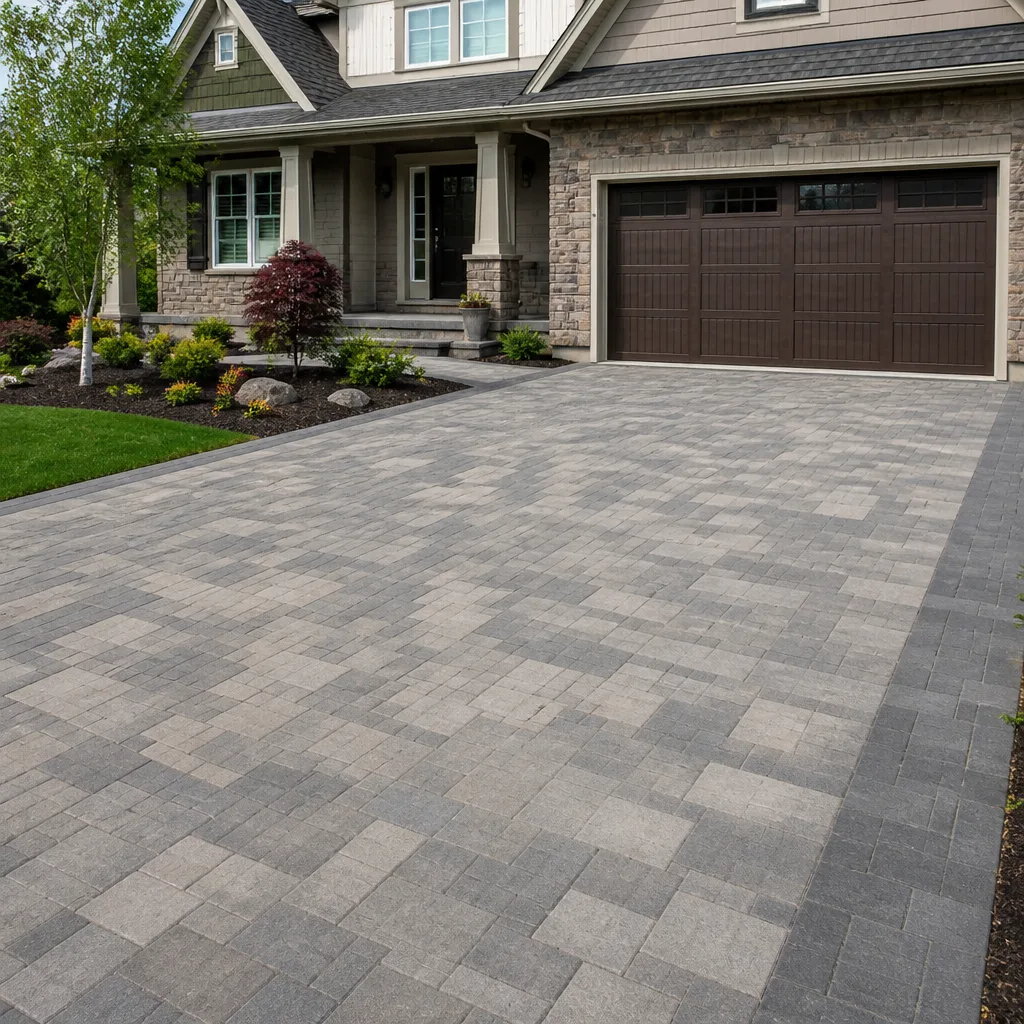 Driveway & pavers
 Kitchen remodeling
 Bathroom remodeling
 Home additions & ADU
 Roofing
 Windows & doors
 Fence
Free written scope consultation - allowances, timeline, and change-order rules on paper before a single trade is scheduled
Driveway & Pavers Troubleshooting in Las Vegas: Common Problems and How to Fix Them
If your pavers keep sinking in the same spot every spring, replacing those pavers won’t fix anything. The pavers are almost never the problem. In our experience across Las Vegas, sunken sections, washed-out joints and white staining trace back to three installation shortcuts taken during the original build: a base layer that was never compacted to depth, a bedding layer that was too thick, and a drainage grade that sends water exactly where you don’t want it. Fix the paver and the problem returns next season. Fix the cause and it stops. This guide teaches you to tell those causes apart, price the repair honestly, and know which jobs are safe to handle yourself.
Quick Answer
Most driveway paver problems in Las Vegas come from a failed base layer, failed bedding sand, or poor drainage grade – not from the pavers themselves. Base failures need excavation and re-compaction, bedding failures need a surface lift and fresh sand, and drainage problems need re-grading before anything else. Diagnosing which one you have is the difference between a repair that lasts and a patch you repeat every year. If you’d rather have it looked at, call (844) 629-1061 for a free estimate.
Styles & brands we work with
- Kitchen remodeling
- Bathroom remodeling
- Home additions & ADU
- Roofing
- Windows & doors
- Driveway & pavers
- Fence
Table of Contents
- Base Failure vs. Bedding Failure: How to Tell Them Apart
- Why Pavers Sink in the Same Spot Every Year
- White Staining and Las Vegas Hard Water
- Drainage Slope in Desert Landscaping
- Wobbly Pavers: Edge Restraint, Roots or Settlement
- Joint Sand Washout and Re-Sanding
- What You Can Safely Do Yourself
- Warranties and Brand-Backed Materials
Base Failure vs. Bedding Failure: How to Tell Them Apart
These are the two most common paver failures in Las Vegas, and they look similar from the surface. They cost very different amounts to fix. A base failure means the compacted aggregate under the pavers has lost its structure – usually because it was laid too thin, never compacted in lifts, or undermined by water. A bedding failure means only the sand layer between pavers and base has shifted, and the base itself is still sound.
Here’s how to tell them apart:
- Press test: Step firmly on the sunken pavers. If they rock loosely over a soft, spongy feel, that’s usually bedding. If the entire section feels solid but has dropped below grade, the base has likely settled.
- Look at the neighbors: A bedding failure typically affects a few isolated pavers. A base failure pulls in a whole row or section, often in a wave pattern.
- Check for sand voids: Pull one paver. If you can see intact, compacted aggregate sitting 1 to 1.5 inches below, the base is fine and the bedding shifted. If you find loose dirt, gaps or gaps filled with mud, that’s base failure.
- Watch the water: Base failures sit where water pools. Bedding failures often follow heavy foot or vehicle traffic lines.
Base repair requires removing pavers, excavating down to subgrade, rebuilding with compacted aggregate in lifts, and re-setting pavers – a genuinely bigger job. Bedding repair is a lift, re-grade and re-sand. In Las Vegas, with our freeze-free winters and intense summer heat, bedding problems tend to appear sooner than in colder climates because the sand never freezes to hold it in place. That means more re-sanding on a maintenance rhythm.
If our team evaluates your driveway, we name the specific cause before quoting the fix – not the other way around. Free estimates are how we start, and the written estimate sets the final price. Call (844) 629-1061.
Why Pavers Sink in the Same Spot Every Year
When pavers sink in the exact same spot every spring, you’re never looking at a “worn-out paver.” You’re looking at an underlying condition reacting to seasonal water and temperature. In Las Vegas, that reaction is predictable – the problem returns because the cause was never addressed.
Four conditions produce repeat sinking:
- Uncompacted base: Aggregate was never compacted in 4-inch lifts during the original build. Over one or two seasons, vehicle weight and thermal movement squeeze the loose material down.
- Wrong base depth: Driveways carrying vehicles need a deeper, well-compacted base than pedestrian walkways. If the contractor used walkway depth on a driveway, the base will fail faster.
- Water directed under the pavers: A grade that tilts water toward the driveway edge, a downspout aimed at the surface, or rain runoff from an adjacent slope pushes water under the pavers and washes out the base.
- Tree roots: The root plate on mature desert trees like mesquite can push pavers up or open gaps under them.
Replacing the specific sunken pavers without fixing the cause guarantees the same dip returns next season. Each repair path is different: new compaction for a base flaw, redirection for a drainage flaw, a root barrier or adjusted paving pattern for tree intrusion.
Checking the slope, the base under a lifted paver, and the water path after rain is the diagnosis. Doing it before more pavers go down saves you money. If a whole section moves, the sequencing of the repair matters – this is where a driveway & pavers contractor with desert experience saves the most. Call (844) 629-1061 for a free estimate.
White Staining and Las Vegas Hard Water
Those white, chalky patches on your pavers are efflorescence – mineral salts carried to the surface by water and left behind as a deposit when the water evaporates. Las Vegas tap water is mineral-rich. That’s why our efflorescence looks faster and heavier here than in cities with softer water. It’s not damage. It’s a symptom of moisture moving through the material.
Efflorescence forms because:
- Water (irrigation overspray, rain runoff, sprinkler drift) is soaking into the paver joints and evaporating through the paver face.
- The heavy mineral content in our local water leaves a salt residue on the surface.
- New pavers off-gas moisture from the bedding sand for the first few months, which is why fresh installs show it first.
What actually removes it without harming the paver surface:
- Start dry: Dry-brush a stiff nylon brush to clear the top layer of salt dust before any liquid touches it.
- Use a mild, low-acid paver cleaner: Choose a cleaner specifically labeled for concrete or clay pavers, not masonry acid, which can etch the surface. Follow the dilution and dwell time exactly as the manufacturer directs.
- Rinse and dry: Clean water rinse, then dry thoroughly – moisture left sitting worsens the deposit.
- Kill the source: Redirect sprinklers away from the driveway and check for pooling at the paver edge. Cleaning without redirecting water means you’ll do it again next season.
Never blast efflorescence off with a high-pressure setting that scours the paver face. It roughs up the surface and makes it collect more water next time.
The trick is telling efflorescence from staining caused by hardware, oil, or hard-water drip, which has a very different fix. If white patches aren’t responding to a mild cleaner, that’s a call-in situation. Call (844) 629-1061 for a free estimate.
Drainage Slope in Desert Landscaping
In most of the country, a steep grade lets water slowly absorb into wet soil. Not here. Our desert ground is hard, our rain comes in short heavy bursts, and there’s nowhere for water to sit before it runs. That makes drainage slope the single most important factor in paver longevity. The standard is a minimum drop of 1 inch for every 8 feet of run, and in flat desert lots it should be measured carefully, not eyeballed.
What a proper grade does:
- Moves water off the pavers toward a safe discharge point such as a landscape drain, curb or swale.
- Keeps water away from the house foundation. Ponding against the slab causes erosion under the driveway and water intrusion into the garage.
- Keeps irrigation overspray off the pavement, which prevents both efflorescence and base saturation.
Check your grade by:
- Watching where water puddles after a heavy rain – a puddle more than 1/4 inch deep that lingers is a red flag.
- Placing a level at 8 feet across the driveway. The far end should sit at least 1 inch lower than the near side.
- Checking that downspouts and irrigation heads point away from the pavement, not at it.
If the water isn’t draining, no amount of re-sanding or fresh pavers will keep the base dry. Fixing grade means lifting the pavers, adding or removing compacted material, and re-setting the surface. That’s a full excavation job, and doing it wrong voids paver warranties. Call (844) 629-1061 for a free estimate if your driveway ponds after storms.
Wobbly Pavers: Edge Restraint, Roots or Settlement
A wobbly paver feels the same from a footstep – but the three causes behind it require completely different repairs. Misdiagnose and you’ll spend money on pavers when the real fix is at the driveway’s edge or twenty feet under the surface.
Here’s how to tell them apart:
- Edge restraint failure: Wobble happens along the outer edge of the driveway, especially near the street or an open side. The paver edge relies on a rigid restraint (a concrete or plastic edge piece) to hold the whole field in place. When that restraint cracks, shifts or was never set deep enough, the edge pavers fan and rock. Repair path: resetting or replacing the restraint and re-packing the edge.
- Tree root intrusion: Wobble clusters around a specific tree or shrub. Push down on the paver – if it feels lifted from below rather than dropped, roots are likely. Root barriers, lifted pavers or a selective root-pruning plan (with an arborist’s guidance) are the fix.
- Soil settlement: Wobble is scattered across the field, not tied to an edge or a tree. This is almost always underpinning – the subgrade lost its compaction. Repair path: excavation of the affected zone and re-compaction.
Our technicians have up to 8 years of experience with all three. The edge-restraint check is a 10-minute inspection: pull the paver at the corner and see whether the restraint is continuous and set at the right depth. Root intrusion is confirmed by digging a small test pit along the wobbling line. Settlement is confirmed by the press test on individual pavers.
Each path affects the drive as a whole – the wrong repair can spread the wobble to a neighboring section. Call (844) 629-1061 for a free estimate and let the diagnosis drive the price, not the other way around.
Joint Sand Washout and Re-Sanding
Joint sand is the small, joint-stabilizing aggregate that locks pavers together and keeps water out of the base. When it washes out, the pavers shift, the joints open, and water gets a straight path into the base layer. In Las Vegas, washout happens faster than in wetter climates because joint sand is also lost to wind and to irrigation spray more than to rain.
Signs your joints need re-sanding:
- Visible gaps between pavers wider than 1/8 inch.
- Loose sand sitting on the surface after a wind event or rinse-off.
- Rattling or rocking pavers when you walk across them.
- Joint sand level sitting visibly below the paver bevel.
Re-sanding is the one paver task most homeowners can safely handle if the issue is limited to sand loss and the pavers aren’t moving. On a stable drive, work in steps:
- Wait for dry weather – sand won’t settle into wet joints.
- Sweep the joint sand into the joints with a stiff broom, working in sections.
- Compact the surface lightly (a hand tamper or plate compactor on the lowest setting) and top off any joints that open back up.
- Sweep off the excess and rinse lightly – not a flood, which can wash the fresh sand back out.
If a whole section has moving pavers, stop. Re-sanding moving pavers traps the failure instead of fixing it. Call (844) 629-1061 for a free estimate before you commit more sand to a base that needs repair.
What You Can Safely Do Yourself
Not every paver problem needs a contractor, but not every problem should be a homeowner project either. Doing the wrong fix voids manufacturer warranties on brand-name pavers like Belgard, Unilock and Techo-Bloc. Doing some fixes yourself is fine and saves real money. Here’s the line.
Safe to do yourself:
- Re-sanding joints on a stable driveway (see above).
- Dry-brushing efflorescence off the surface.
- Pulling one or two raised or sunken pavers to confirm the cause, then re-setting them on fresh bedding sand.
- Redirecting sprinkler heads and downspouts away from the paver surface.
- Rinsing off loose landscape debris and leaves from the surface.
Requires a contractor:
- Any repair under the pavers – excavation, re-compaction, or rebuilding a base.
- Re-grading a driveway. This is area-wide work and affects drainage to the house.
- Replacing a cracked edge restraint on a whole side.
- Anything involving roof-related water flow that intersects the drive – this is where roofing work and grading need to talk to each other.
- Structural repairs around a home addition or ADU, where the paver scope ties into home additions & ADU work.
Warranty is the deciding factor on borderline jobs. Manufacturer warranty terms are specific – Belgard, Unilock and Techo-Bloc each publish their own installation standards and warranty conditions. Work that ignores those specs can void coverage even if the pavers themselves are fine. Ask about manufacturer warranty coverage before any repair starts. Call (844) 629-1061 for a free estimate.
Warranties and Brand-Backed Materials
The single biggest difference between a repair that holds and a repair that fails is whether the original install was done to manufacturer spec. We’ve walked hundreds of Las Vegas driveways where the paver itself was a quality brand – Belgard, Unilock, Tremron, Techo-Bloc, Cambridge Pavers – and the installation ignored the manufacturer’s base depth, edge restraint or drainage requirements. That’s frustrating: the homeowner paid for premium pavers and got a premium paver installed on an amateur base.
What to look for in a repair estimate:
- Named base specifications. The estimate should say how deep the aggregate base is, how it will be compacted and in how many lifts.
- Named edge restraint. Not “we’ll add some edging” – the specific restraint material and depth.
- Named drainage plan. Where water goes and what slope is maintained.
- Brand of sand, edge restraint and pavers specified. That way you know exactly what’s going in.
- Manufacturer-backed paver brands with published warranties. Ask for the manufacturer warranty coverage on the pavers themselves, separate from the installer’s own workmanship warranty.
For tile-style paver products, CertainTeed and Owens Corning both publish installation requirements. IKO and Atlas do the same for their product lines. None of them warranty a repair that ignores their specs. Working to manufacturer spec – not to a general rule of thumb – is what preserves coverage.
If your driveway has been repaired before and the same spot keeps failing, the first question to ask is whether the last repair followed spec. Call (844) 629-1061 for a free estimate and we’ll tell you before you commit.
Common Mistakes to Avoid
- Replacing sunken pavers without fixing the base. The fresh paver sinks too because the cause is still there. Always diagnose the base before replacing the top.
- Adding sand to a moving paver section. Top-dressing joint sand onto pavers that are already wobbling hides the failure and doesn’t fix it.
- Washing efflorescence off with a high-pressure nozzle. Blasting the surface scuffs the paver face, roughs it up and makes it collect more water next season.
- Piersing an edge restraint that was set too shallow to begin with. If the original restraint never went to depth, one paver repair just kicks the fan effect down the edge.
- Ignoring the drainage slope because the drive “looks flat.” In Las Vegas, flat desert lots with heavy rain bursts are the most common cause of repeated base pumping after storms.
- Assuming sprinkler overspray is harmless. Mineral-rich water on the driveway speeds efflorescence and base saturation. Aiming sprinklers at pavement is a slow repair bill.
- Signing a repair estimate that names no brands or base specs. If the estimate doesn’t say which pavers, sand and edge restraint are going in, you can’t compare it to another bid.
See the difference
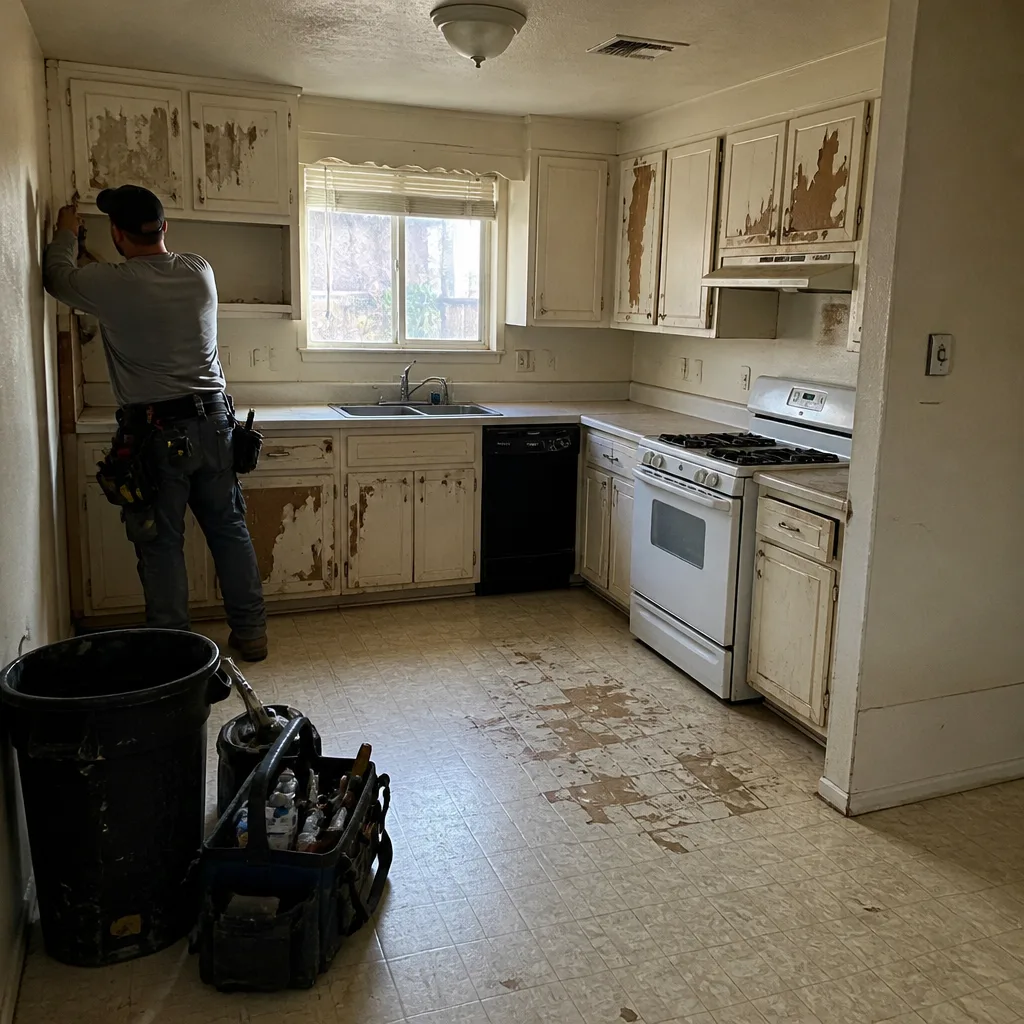 Before
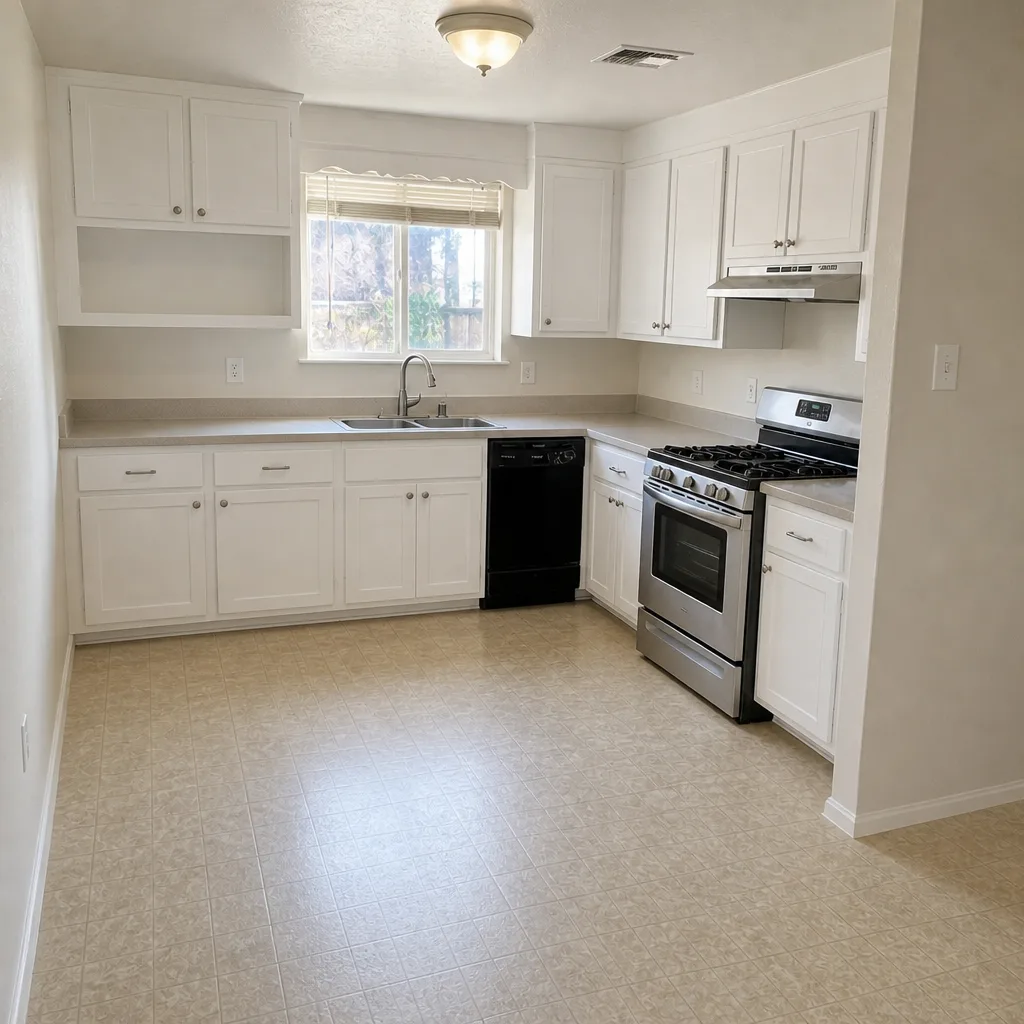 After
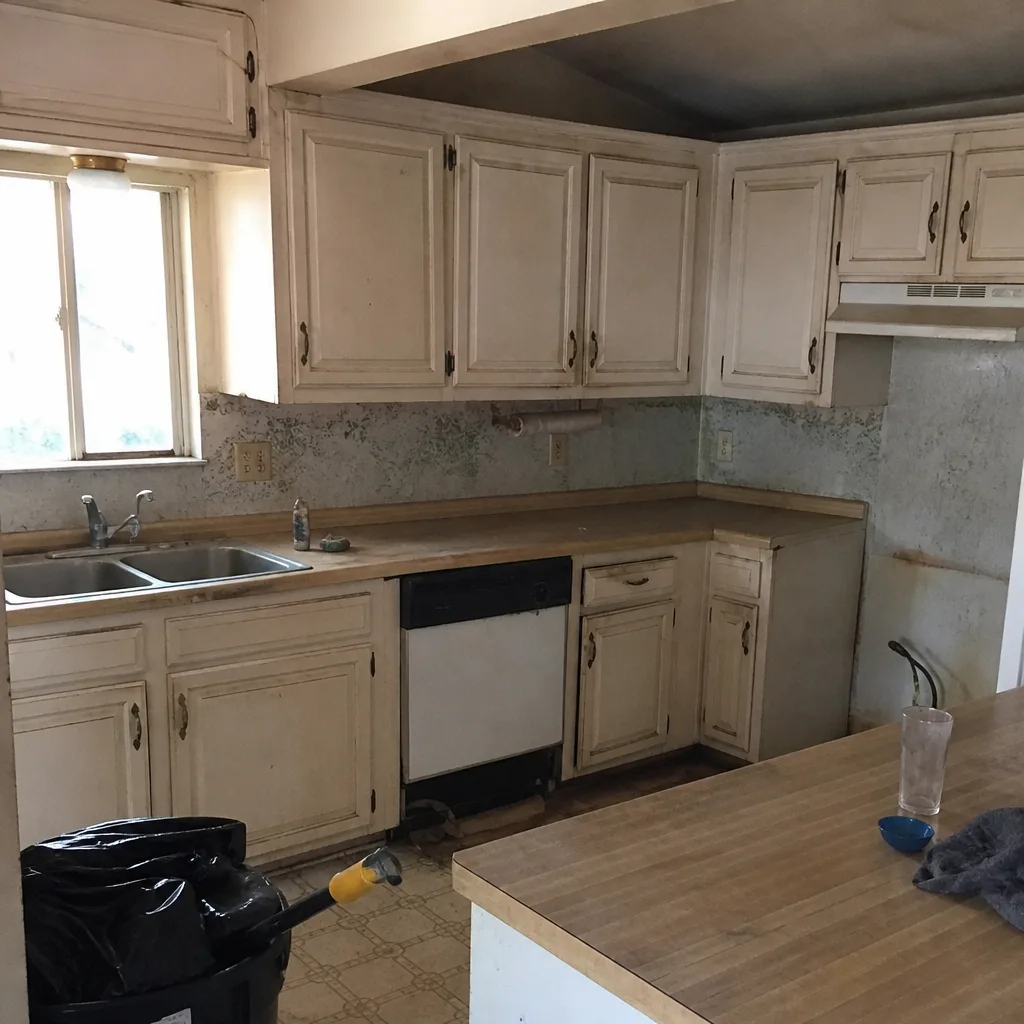 Before
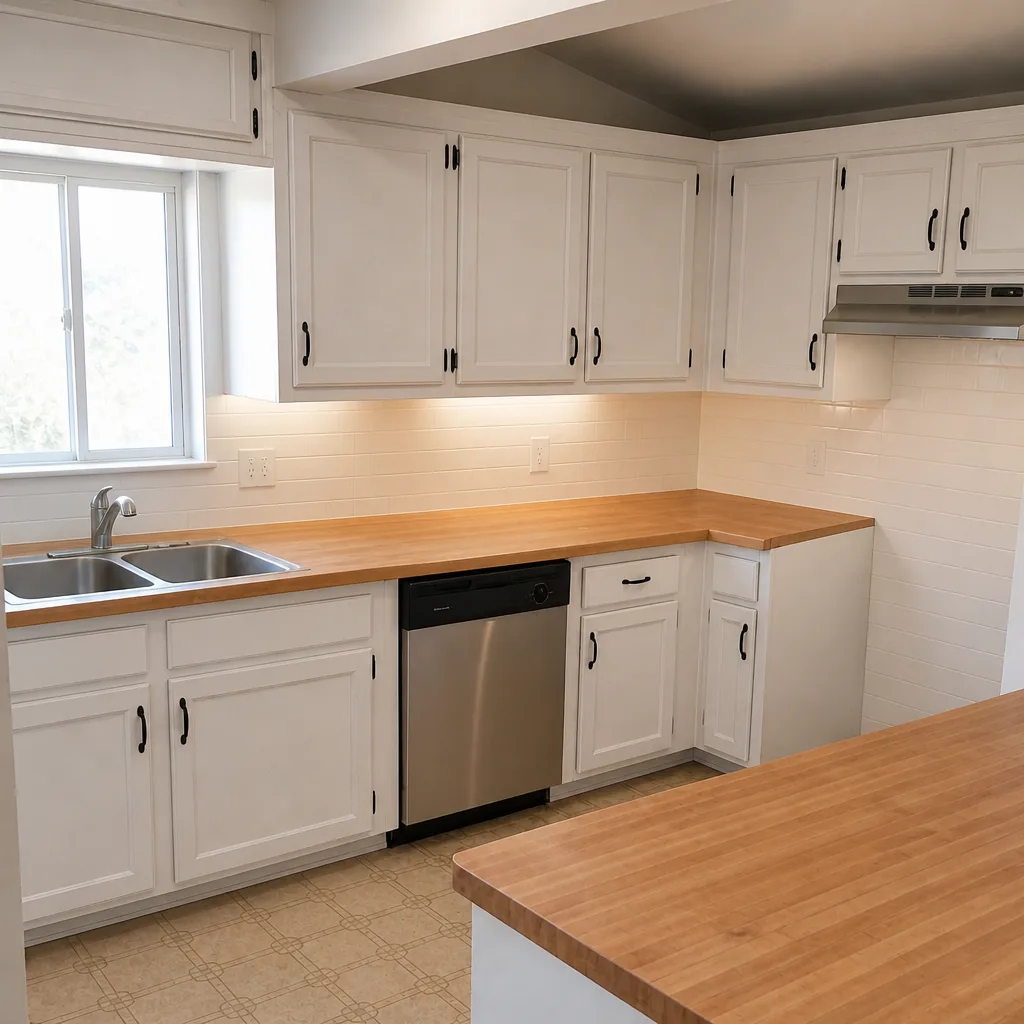 After
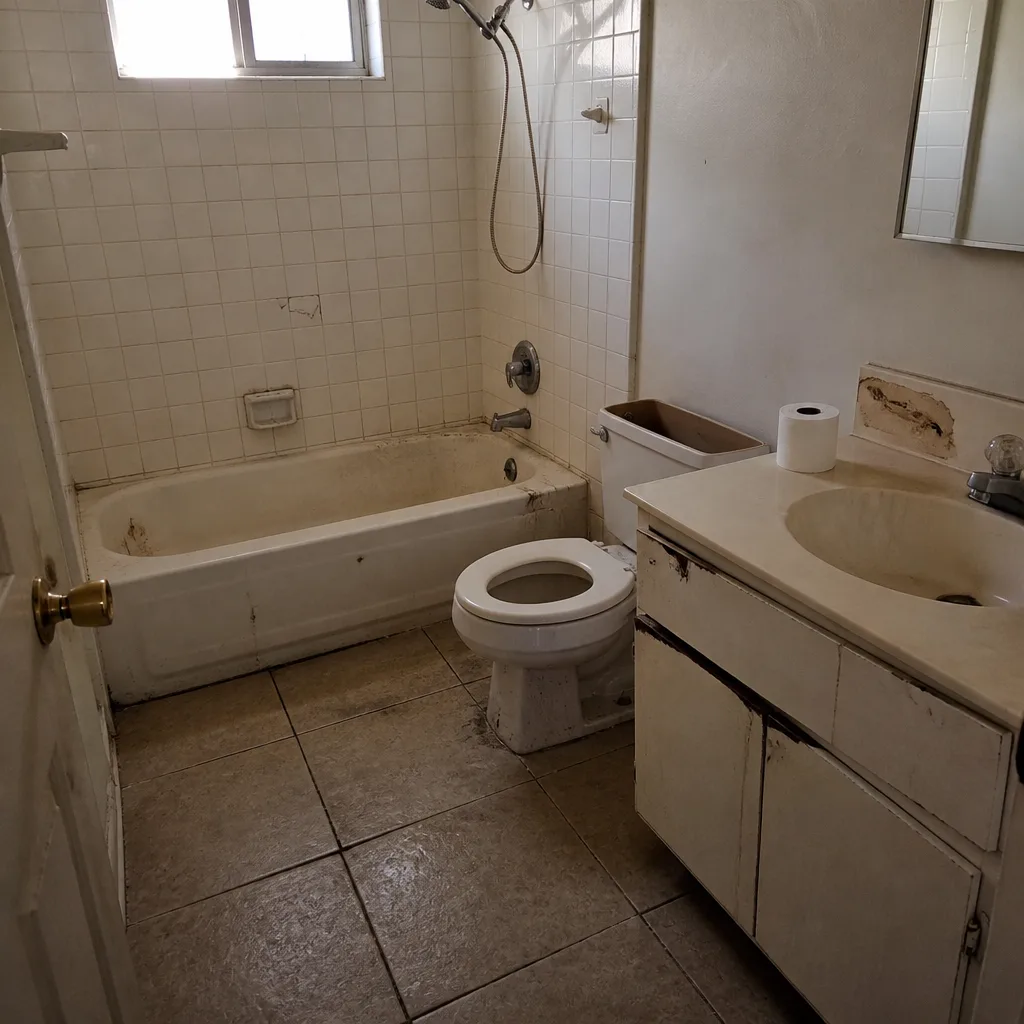 Before
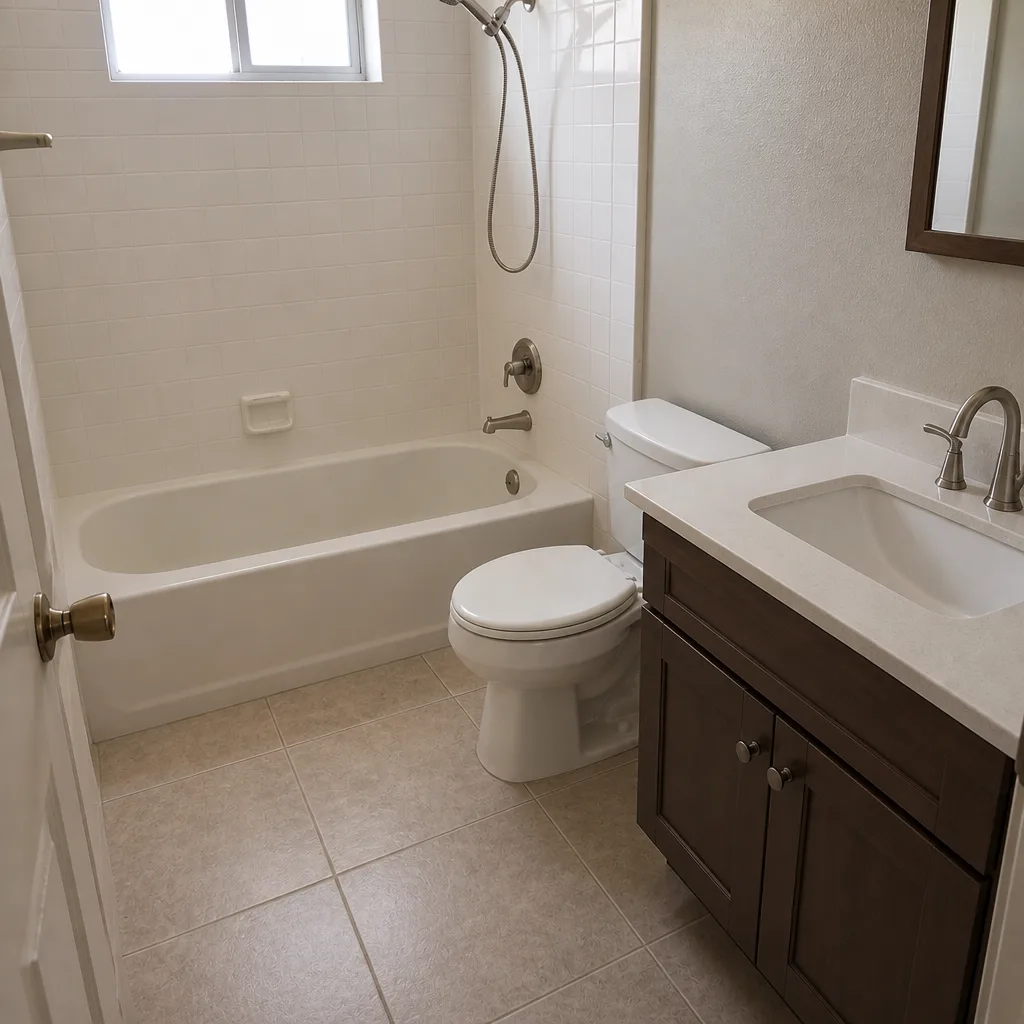 After
When to Call a Professional
Call a professional when the pavers are moving across a section, not just staining, and when the cause sits below the surface. In Las Vegas, that covers a whole row sinking after the monsoon season, water pooling at the garage apron, a paver edge fanning after a car turns into the drive, and wobbly pavers around a single tree. Those are all base, drainage or restraint problems, and each requires excavation or re-grading behind the paver line. Trying a quick sand top-up on moving pavers typically compounds the failure. Las Vegas Construction Co offers free estimates in Las Vegas – call (844) 629-1061. We answer 24/7. Fast dispatch from 7am to 7pm, Sunday through Friday.
Frequently Asked Questions
Bedding-sand repairs typically cost less than base or drainage repairs because they don’t require excavation. Base and re-grade fixes cost more because they involve lifting pavers, removing compacted material and rebuilding. Every job is priced per job by a written estimate, so the only honest answer is a free inspection. Call (844) 629-1061 for an exact quote – estimates are free.
No, not on a properly scoped job. The written estimate sets the final price. If the work reveals a hidden base problem, we stop and re-scope before proceeding rather than running up a bill. Call (844) 629-1061 to schedule a free estimate.
Because the base layer under that spot is compromised, not the pavers. Uncompacted aggregate, wrong base depth or water directed under the pavement all cause repeat sinking. Replacing pavers on top of a bad base guarantees the dip returns. Call (844) 629-1061 for a free estimate.
Dry-brush first, then use a mild paver cleaner labeled for concrete or clay pavers. Our hard water leaves efflorescence faster here than in most cities, so removing the deposit without addressing the water source means it comes back. Call (844) 629-1061 if the staining doesn’t lift with a mild cleaner.
Most driveway and paver replacements don’t need a building permit, but grading changes that affect drainage to a house or structure can – check with the city’s building department. We pull any permits the scope requires and confirm them in the written scope. Call (844) 629-1061 for a free estimate.
A bedding-sand refresh on a stable drive takes a day. A base or drainage repair takes longer because it involves lifting pavers, excavation and re-compaction, often over more than one visit. The written estimate states the timeline for your specific job. Call (844) 629-1061 for a free estimate.
The Bottom Line
Paver problems in Las Vegas almost always trace to one of three failures: a base that was never compacted to depth, bedding sand that shifted, or a drainage grade that sends water exactly where it shouldn’t. Diagnosing which one you have before any repair is the whole game. Fix the symptom without fixing the cause and you’ll repeat the patch next season. If the pavers are moving across a section, it’s time to call. The Las Vegas Construction Co team works driveways, fencing through fence installation, and the full exterior-to-interior scope. Free estimates start with a call to (844) 629-1061. We answer 24/7. Fast dispatch from 7am to 7pm, Sunday through Friday.
Written by the team at Las Vegas Construction Co.