
Last updated November 17, 2026
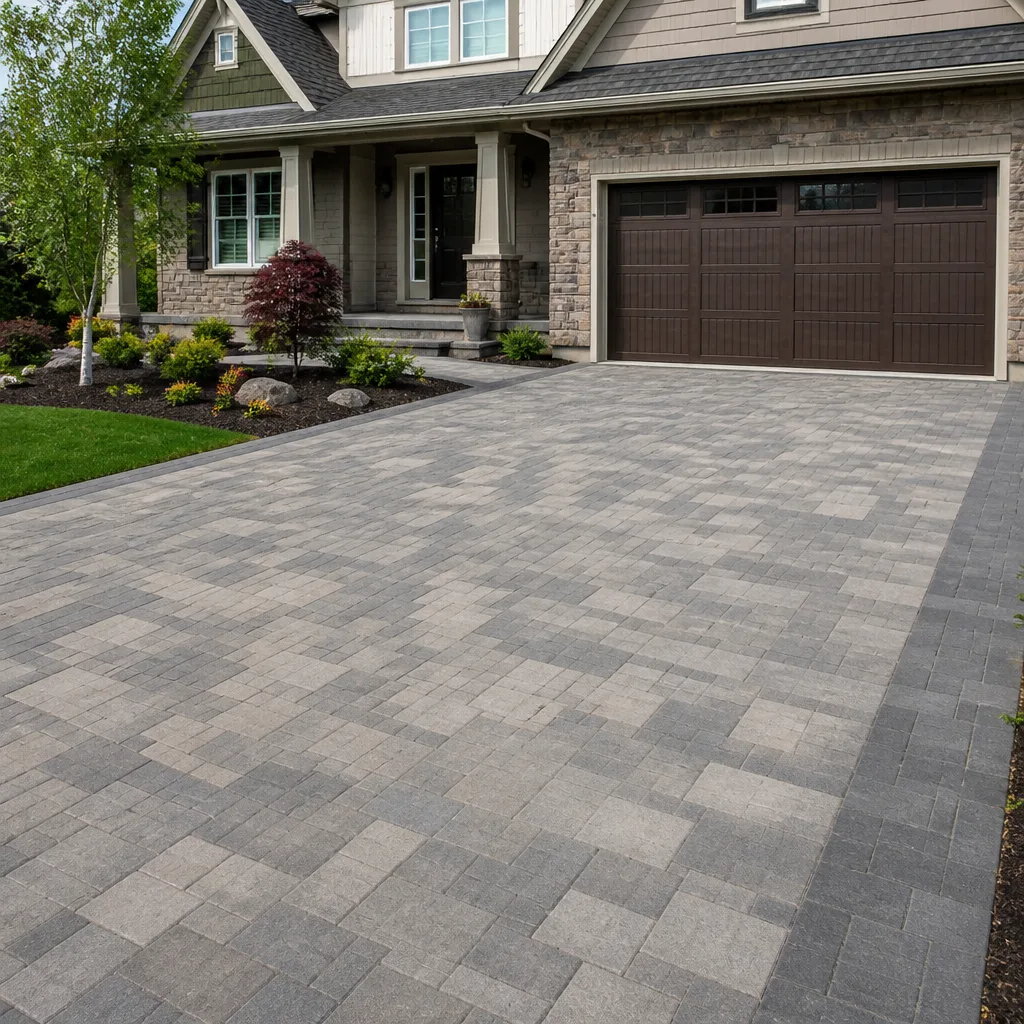 Driveway & pavers
 Kitchen remodeling
 Bathroom remodeling
 Home additions & ADU
 Roofing
 Windows & doors
 Fence
Free written scope consultation - allowances, timeline, and change-order rules on paper before a single trade is scheduled
Driveway & Pavers Maintenance Checklist for Las Vegas Homeowners
A paver sealer rated for coastal California climates can bubble and peel off a Las Vegas driveway in less than two years, and the product isn’t the problem. It was formulated for a place where the sun is softer and the ground doesn’t push back with alkali salts. Las Vegas is a different job entirely: 115°F surface temperatures in July, relentless UV, and caliche soil that migrates through joints and heaves whole sections of pavers if you let it. Most maintenance guides are written for freeze-thaw country and don’t apply here. This checklist is built around what actually happens in Las Vegas. You’ll get a month-by-month schedule, the sealer and joint-sand types that survive here, a pressure-washing PSI range by paver material, and the line where a homeowner’s work turns into a call.
Quick Answer
Las Vegas driveway pavers need a different maintenance calendar than the rest of the country. The big three threats here are UV degradation, alkali soil migration from caliche, and unmanaged surface heat – not freeze-thaw. Seal with a UV-stabilized, heat-rated sealer every two to three years, top off polymeric joint sand at the same interval, pressure-wash at the right PSI for your paver material, and inspect for heaving after every monsoon season. Most of this is homeowner work. Heaving, loose base, and failed joint sand across a whole section are not.
Styles & brands we work with
- Kitchen remodeling
- Bathroom remodeling
- Home additions & ADU
- Roofing
- Windows & doors
- Driveway & pavers
- Fence
Table of Contents
- Why Las Vegas Driveways Age Differently Than Anywhere Else
- The Las Vegas Month-by-Month Maintenance Calendar
- Choosing Sealers and Joint Sand That Survive 115°F
- The Correct Pressure-Washing PSI Range by Paver Material
- How to Spot Caliche-Driven Heaving Before It’s a Reinstallation
- Concrete Driveways Deserve Their Own Checklist
- DIY versus Professional: Where the Line Actually Sits
- Common Mistakes to Avoid
Why Las Vegas Driveways Age Differently Than Anywhere Else
Most paver maintenance advice online comes from the Midwest and Northeast, where the enemy is water freezing in joints and prying everything apart. Las Vegas doesn’t have that problem. What Las Vegas has instead is a combination that no generic guide accounts for.
First, surface temperature. A paver driveway in Las Vegas can reach 140°F or more on a July afternoon. That’s hot enough to break down sealers that weren’t formulated for sustained heat, and hot enough to stress the polymer binders in joint sand. Second, UV. Las Vegas averages around 3,800 hours of sunshine a year, and UV exposure degrades everything organic: sealer films, joint sand binders, and the color pigments in lower-grade pavers.
Third, caliche. Much of the Las Vegas valley sits on caliche, a naturally cemented calcium carbonate layer just below the soil surface. Caliche doesn’t drain like normal soil. When water moves through it, it carries dissolved alkali salts upward into your joint sand and base. Those salts crystallize as they dry and push pavers up and out of alignment.
Fourth, monsoon season. From roughly July through September, Las Vegas gets short, intense rain events that dump more water in an hour than the soil can absorb. That water is the delivery vehicle for the salt migration and the main trigger for heaving.
The takeaway is simple. If you’re maintaining a Las Vegas driveway using a checklist built for Ohio, you’re doing the wrong jobs at the wrong times of year. The rest of this guide fixes that.
The Las Vegas Month-by-Month Maintenance Calendar
Las Vegas has four real seasons for paver care, and they don’t match the calendar most guides assume. Here’s how we organize the year when we plan driveway maintenance in Las Vegas. For the bigger work, our driveway & pavers team handles repairs and new installs.
January through March: Cool-Season Catch-Up
- Walk the whole driveway and note any rocking pavers, sunken corners, or joints that have lost sand over the winter.
- Clean out joints with a stiff brush or a shop vac – never a pressure washer at full blast.
- Top off polymer joint sand where a fingernail can push in more than about a quarter inch.
- Check drainage: water should sheet off the driveway and away from the slab edge, not pool along the garage apron.
- Inspect the edges for sand loss where pavers meet the curb or landscaping.
April through June: Pre-Summer Prep
- Deep-clean the pavers before summer heat sets in – this is the best time to pressure-wash.
- Reapply sealer if it’s due (roughly every two to three years). Cool mornings and mild days give the best cure.
- Trim any trees or shrubs that shade the driveway; shade combined with irrigation runoff grows algae and dark streaks fast.
- Look for hairline cracks in joint sand before the first heat wave; those cracks widen quickly once summer begins.
July through September: Monsoon Watch
- After the first big monsoon rain, walk the driveway again – this is when heaving shows up.
- Check the base and joints near the garage and any low corner. That’s where water collects and salt migration starts.
- Don’t schedule a fresh sealer application in the middle of monsoon season – rain before cure destroys the coat.
- Sweep up any sand that washes out immediately, before it stains or clogs the drainage path.
October through December: Cool-Season Reset
- Second clean and joint-sand top-off of the year – this is the cool, dry window that survives the cure.
- Re-grit surfaces if they feel slick; retired Las Vegas pavers often develop a polished sheen after several summers.
- Inspect the whole perimeter for sand erosion, especially on any slope or grade.
- Address any heaving now, before the winter cool pushes salts deeper in.
Choosing Sealers and Joint Sand That Survive 115°F
The single most common sealer mistake in Las Vegas is buying a product formulated for coastal or temperate climates. Those products work fine at 80°F. At 130°F they bubble, flake, and peel, usually within 18 months. Look for sealer labeled UV-stabilized, heat-rated, and breathable – and if the label lists a maximum service temperature, it needs to be well above what your driveway reaches in July.
Here’s what to look for in a Las Vegas sealer:
- UV-stabilized formulation. Without it, the film yellows and starts to flake off after the second summer. Look specifically for “UV-stabilized” on the label, not just “UV-resistant.”
- Breathable, not film-forming. A penetrating sealer penetrates the paver and lets moisture escape; film-forming sealers trap moisture and bubble under heat. For Las Vegas, breathable wins almost every time.
- Alkali-resistant. Given caliche, a sealer that breaks down in high-pH conditions is money spent for nothing.
- Heat rating appropriate for pavers. If the label doesn’t mention a maximum surface temperature, call the manufacturer’s tech line before buying.
Joint sand deserves the same scrutiny. Standard polymeric sand is fine in cool regions, but the polymers can fail under sustained high heat. Ask specifically for a heat-rated polymeric sand, or a stabilized sand formulation labeled for hot, dry climates. Stabilized sand (often called ASTM C144 with a stabilizer additive) tends to perform well in Las Vegas because it hardens by drying rather than by solvent evaporation.
Application timing matters as much as the product. Sealers need air temperatures well below the peak daytime high to cure properly, which means applying in spring or fall, not July. Most sealers want 70°F or below with no rain for 24 to 48 hours. In Las Vegas, that points straight to the spring and fall windows.
The Correct Pressure-Washing PSI Range by Paver Material
Going too high on PSI is the most frequent homeowner mistake we see with Las Vegas pavers. It’s tempting to blast the joints clean and get everything looking new, but a pressure washer at the wrong setting can strip the face of the paver, erode joint sand, and actually make caliche salt migration worse by opening up channels for water to seep in.
Here’s the working range we use as a starting point:
| Paver Material | Typical PSI Range | Notes |
|---|---|---|
| Standard concrete pavers (Belgard, Unilock, Techo-Bloc, Tremron, Cambridge Pavers) | 1,200 to 1,800 PSI | Start low and work up. Keep the nozzle moving. A fan tip, not a pencil tip. |
| Clay brick pavers | 800 to 1,200 PSI | Softer surface. Higher pressure strips the face and opens pores. |
| Travertine, limestone, and natural stone pavers | 600 to 1,000 PSI | Natural stone is the most pressure-sensitive. Low settings only, wide fan. |
| Permeable pavers | 1,000 to 1,500 PSI | You’re cleaning the surface only. Don’t push water into the infiltration joints. |
Two more things to remember. First, keep the nozzle at least 12 inches from the surface and angle it at about 30 to 45 degrees. Second, don’t pressure-wash joint sand right before you plan to re-sand – the whole point of a clean joint is to have a dry, sand-ready channel.
How to Spot Caliche-Driven Heaving Before It’s a Reinstallation
Caliche is the most underrated paver problem in Las Vegas, and it’s the one that turns a maintenance task into a full reinstallation if it’s ignored. In our experience, the earliest sign of heaving is a paver that rocks slightly underfoot when you walk on it. That’s not always a loose base – it’s often the start of salt migration pushing from underneath.
Here’s the diagnostic sequence we run, and the one any homeowner can follow:
- Walk the whole driveway and note where it rocks. Pay particular attention to the edge next to the garage and any low corner where water drains toward or past the pavers.
- Check for white, chalky residue in the joints. A fuzzy white crust on sand or paver edges is often the visual sign of alkali salts wicking up.
- Look for a raised lip where the pavers meet the garage slab or the driveway edge. If the driveway is lifting away from the slab, heaving has started.
- Check for spread. Run a straightedge across a suspected area; if the joint is noticeably wider in that zone, salt is pushing outward.
- Look for pooling water along any paver edge after rain. Pooling accelerates salt migration and should be corrected early.
If you catch it early – a couple of rocking pavers, salt crust in one area – the fix is removing and re-setting those pavers, replacing the joint sand, and improving drainage. If the heaving has spread across a whole run, the base itself has moved, and that’s a professional repair. Left alone, a caliche problem that starts as a maintenance task on one paver becomes a reinstall across the entire driveway.
One thing we tell customers all the time: caliche isn’t only a problem on new installs. It’s a problem that develops on every driveway in a caliche zone, regardless of whether the original installation included a proper base treatment. A driveway installed three years ago in the Las Vegas valley can still develop salt-driven heaving if water has been pooling at the edges.
Concrete Driveways Deserve Their Own Checklist
Most of this guide focuses on pavers, but concrete driveways in Las Vegas have their own maintenance calendar. The enemies are still UV and alkali soil, but the symptoms are different.
Concrete interacts with caliche differently than pavers. Instead of salts pushing upward through joint sand, alkali attacks the concrete itself – often called alkali-silica reaction (ASR) – and shows up as a spiderweb crack pattern or a whitish gel sweating out of the surface. If you see that, it’s a professional call, not a homeowner fix.
What concrete owners should do:
- Seal every two to three years with a UV-rated concrete sealer. Unsealed Las Vegas concrete dries out and dusts long before the same concrete in a cooler, moister climate.
- Fill cracks early. A hairline crack in Las Vegas fills with blowing dust, and the dust expands and widens the crack. Filling with a polyurethane crack sealer stops the process.
- Evaluate joints every spring. Control joints are designed to fail first – if one has opened wider than a quarter inch, it’s time to clean and re-seal it.
- Watch for scaling or flaking. If the surface is spalling, it’s likely a mix or finishing issue, and it needs professional assessment.
If your concrete driveway has reached the end of its life and you’re weighing replacement options, we install new driveways in both concrete and brand-name pavers – Belgard, Unilock, Techo-Bloc, Tremron, and Cambridge Pavers – with manufacturer warranties as a yardstick for comparison. That’s a scope where knowing the brand and warranty picture up front matters, and it’s the point at which a maintenance checklist turns into a project.
DIY versus Professional: Where the Line Actually Sits
There’s a lot of driveway work a homeowner in Las Vegas can genuinely do. Sweeping, joint sand top-offs, seasonal cleaning, crack filling, and small paver re-setting are all reasonable DIY tasks if you’re careful. Where you should stop and call a professional is when the problem is structural or under the surface.
Here’s our rule of thumb:
True homeowner tasks:
- Weekly sweeping and rinsing of surface dust
- Joint sand top-offs in small areas
- Annual pressure-washing (at the right PSI)
- Sealer application (spring or fall only)
- Filling hairline cracks in concrete
Time to call a professional:
- More than a handful of rocking pavers in one area
- White chalky crust across a large joint run
- Visible lift at the edge where the driveway meets the garage slab
- Spiderweb crack pattern in concrete with gel residue
- Water pooling in a way that hasn’t changed with a fresh draining path
- Any concern that the base under the pavers has moved
If our technicians have up to 8 years of experience, that’s because we spend a lot of that time diagnosing whether a driveway needs a repair or a replacement. The cost of a wrong call goes both directions: a homeowner who re-installs too early wastes money; a homeowner who waits too long pays for a full reinstallation instead of a spot repair. Our Las Vegas Construction Co team handles the diagnosis and can walk you through both paths.
A note on seasonal timing. If you’re planning a larger driveway project – a replacement, a new install, or an expansion – the cooler months in Las Vegas are the right window for the work. Call us to book a consultation and we’ll fit the schedule to the installation’s needs, not the calendar’s.
Common Mistakes to Avoid
- Buying a sealant rated for a milder climate. A sealer labeled for California or the Pacific Northwest isn’t rated for 115°F Las Vegas surface temperatures. It will peel within two summers, and the money is gone.
- Pressure-washing at full blast. The most common homeowner mistake. High PSI strips joint sand, opens the paver face to UV damage, and gives caliche more places to work. Stay in the 600 to 1,800 PSI range and keep the fan tip moving.
- Applying sealer in summer heat. A July afternoon in Las Vegas is the wrong time to seal a driveway – the sealer flashes before it soaks in, and the film fails. Spring and fall are the windows.
- Using standard polymeric joint sand in the hottest zones. High heat can soften polymer binders. Ask for a heat-rated formulation and confirm the manufacturer’s rating before you buy.
- Ignoring a single rocking paver. In our experience, one rocking paver in a caliche zone is often the first sign of salt migration. Fixing it early is a maintenance job; ignoring it can turn into a reinstall.
- Letting monsoon runoff pool at the driveway edge. A single low spot that holds water after a storm accelerates everything – salt migration, joint erosion, and settling. Correct the pitch or drainage path.
- Sealing over wet joints. Applying sealer on joints that are still damp traps moisture under the film and causes blistering. Joint sand has to be genuinely dry before sealing.
- Waiting too long on concrete spalling. A flaking surface is more than cosmetic – if the mix or finish is the problem, only professional resurfacing or replacement solves it.
See the difference
 Before
 After
 Before
 After
 Before
 After
When to Call a Professional
Call a professional when the problem is structural, when the base has moved, or when the water isn’t draining. Specific scenarios that genuinely cross into professional territory: any new heaving or lifting where the pavers meet the garage slab, salt crust across a whole joint run, a white gel residue in concrete cracks, a base failure under a paver section, pool-of-water drainage that hasn’t responded to a fix, or any full driveway reinstallation consideration. If you’re not sure, that’s the call – it costs nothing to have someone look. Las Vegas Construction Co offers free estimates in Las Vegas – call (844) 629-1061. We answer 24/7. Fast dispatch from 7am to 7pm, Sunday through Friday.
We also handle the full scope around a driveway, from fence installation to home additions & ADU work, which means one point of contact for a project that touches more than one part of the property. If you’re planning something larger, that coordination is worth factoring in.
Frequently Asked Questions
Every two to three years for a UV-stabilized, heat-rated sealer. Las Vegas sun is harsher than almost anywhere else in the country, so a sealer rated for a milder climate may not last the window. Spring and fall are the right seasons to apply in Las Vegas; summer and monsoon season are not. If you’re unsure whether it’s time, the test is simple: pour a glass of water on the pavers. If it soaks in quickly, the sealer needs refreshing.
For standard concrete pavers, 1,200 to 1,800 PSI. Clay brick runs 800 to 1,200 PSI, natural stone like travertine and limestone should be 600 to 1,000 PSI, and permeable pavers should stay in the 1,000 to 1,500 PSI range. The number one mistake is going too high, which strips joint sand and opens the paver face. Use a fan tip, not a pencil tip, and keep the nozzle 12 inches or more from the surface. Call (844) 629-1061 if you’d rather we handle the cleaning and sealing in one visit. Estimates are free.
Caliche is a naturally cemented calcium carbonate layer in the soil that’s common across much of the Las Vegas valley. It doesn’t drain like ordinary soil, so water moving through it carries dissolved alkali salts upward into your paver joints and base. When that water dries, the salts crystallize and push pavers out of alignment, which is what we call heaving. Catching it early – a single rocking paver, a white crust in the joints – usually means a targeted repair. Waiting means a full reinstall. Call (844) 629-1061 to have us look. Estimates are free.
Not the standard formulation – use a heat-rated polymeric sand or a stabilized sand labeled for hot, dry climates. Polymer binders in standard sand can soften under sustained heat. Las Vegas pavers see surface temperatures far above ambient air temperature, and the joint sand takes the brunt of it. Ask for the manufacturer’s temperature rating before you buy anything off the shelf. If you’re not sure what’s already in your joints, we can identify it during an estimate.
Spring and fall. Las Vegas summer heat and monsoon-season rain are the wrong conditions for both jobs – sealer flashes before it soaks in during July, and a monsoon storm in August can wash away a fresh coat before it cures. April and October are good targets for sealing. Pressure-washing is a bit more flexible, but spring is ideal because it clears the joints before summer’s salt migration begins. Call (844) 629-1061 to schedule ahead of the seasonal windows. Estimates are free.
That residue is likely alkali salt that’s migrated up through the joints – the early sign of caliche-driven heaving. Don’t just sweep it away. Inspect the joints for sand loss, check for rocking pavers, and look for lift at the driveway edge. Small areas can usually be corrected with a targeted repair; a whole run of white crust across the joints means the base has moved and needs a professional diagnosis. Call (844) 629-1061. We answer 24/7. Fast dispatch from 7am to 7pm, Sunday through Friday.
We’re closed Saturday and open Sunday through Friday, 7am to 7pm. If a question comes up on a Saturday, call and we’ll book the work into the next opening.
The Bottom Line
Las Vegas driveways don’t age like driveways anywhere else. UV, alkali soil, 115°F surface temperatures, and monsoon season do things to pavers and concrete that most maintenance advice simply doesn’t account for. Follow the Las Vegas calendar in this guide, use sealers and joint sand rated for this climate, keep pressure-washing in the correct PSI range for your paver material, and inspect for heaving after every monsoon. The homeowner jobs – sweeping, joint sand top-offs, seasonal sealing, small crack fills – are absolutely doable. The base, the heaving, the salt migration, and the structural stuff call for a trained eye. Catching those early saves far more than a maintenance checklist ever will.
Call (844) 629-1061 for a free estimate. We answer 24/7. Fast dispatch from 7am to 7pm, Sunday through Friday. Every estimate is written, line-item, and free, and the written estimate sets the final price. Our technicians have up to 8 years of experience with driveways, pavers, and the specific conditions that make a Las Vegas driveway age the way it does. If your driveway is showing heaving, salt residue, or a joint run that’s failing, we can look at it and tell you plainly whether it’s a repair or a reinstall.
Written by the team at Las Vegas Construction Co.